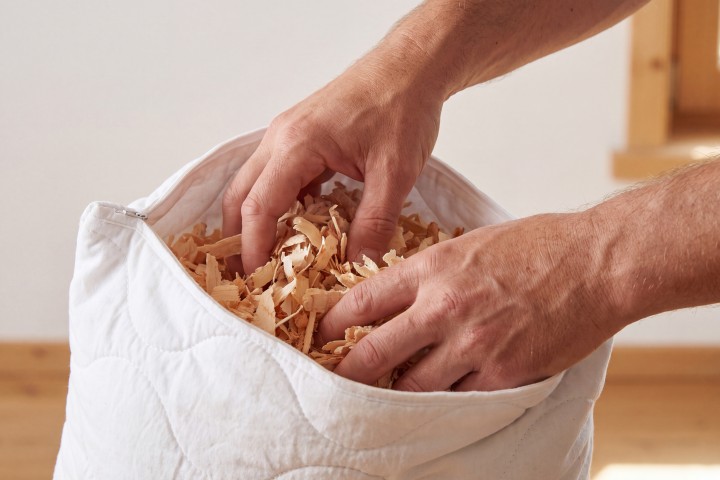
Swiss pine shavings, curls and flakes: what is the difference?
Published on
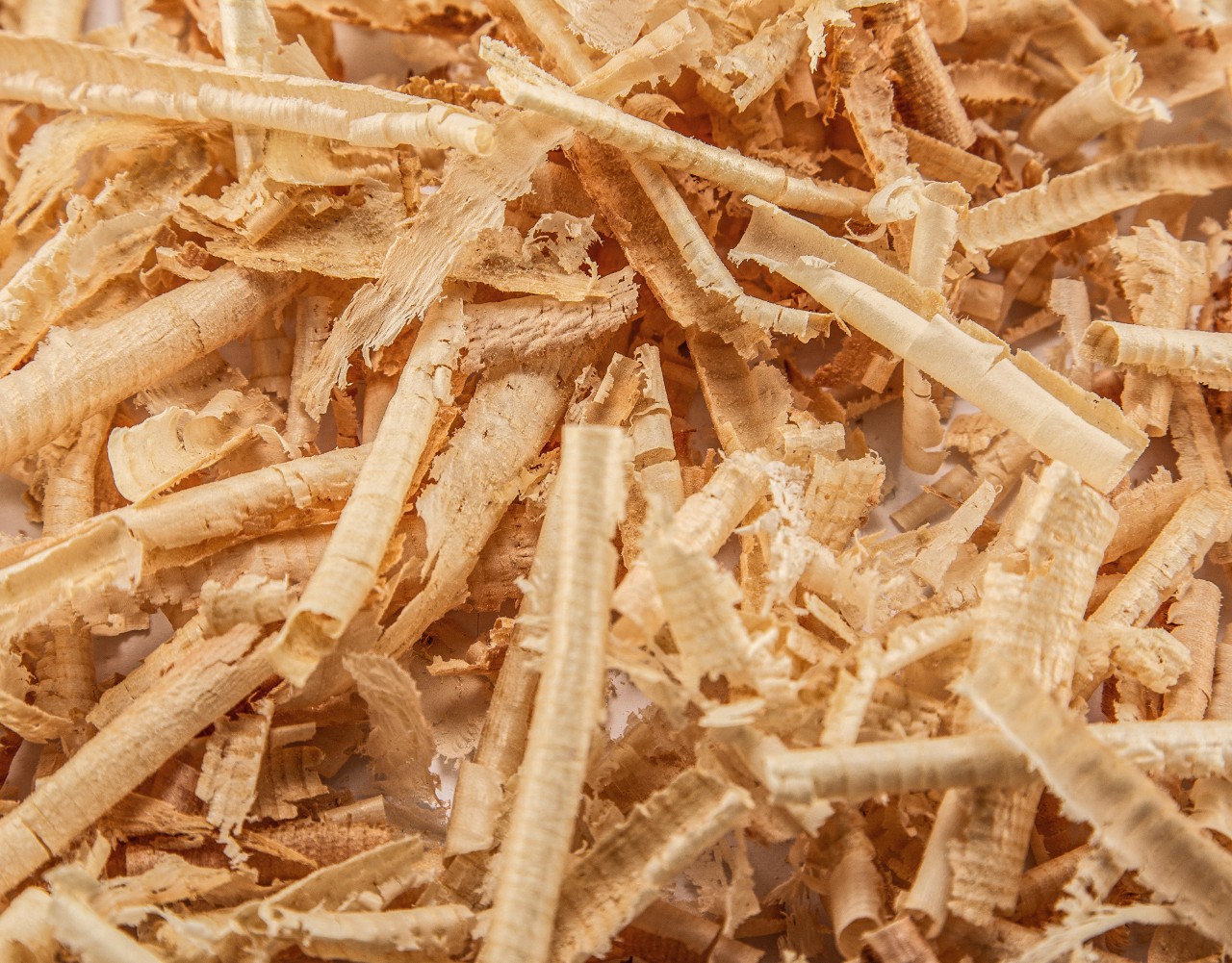
Anyone shopping for Swiss pine shavings finds curls, flakes, shavings and wool — plus first and second choice on top. The terms are not standardised; every workshop names them slightly differently. Here is how we use them.
Swiss pine curls
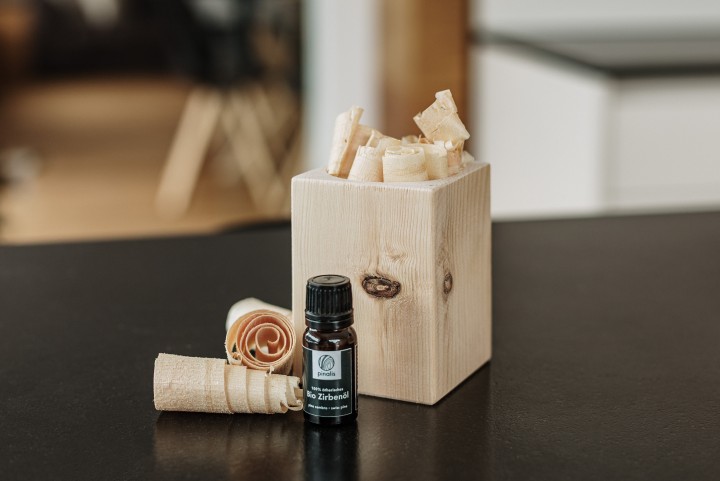
Long, twisted planer shavings, the kind that come off the lathe and the plane. They are loose, very springy and expose a great deal of surface to the air — which is why they give off the strongest scent. Ideal for open bowls, scent sachets and anywhere they are on show. They are less suited to cushions: they are bulky and press.
First choice, for us, means light curls from the heart of the wood, without bark and without dark parts. Second choice is the same wood, but less even, with darker pieces and a little more dust. The scent is practically identical — the difference is visual. For a cushion, which nobody looks inside, second choice is the more sensible buy.
Swiss pine flakes
Shorter and flatter than curls, more even in size. They settle more densely without becoming hard — which makes them the right filling for cushions and neck rolls. They give off a little less scent than curls, but more evenly and for longer.
Shavings as an umbrella term
“Shavings” is the general word that covers both. Where a listing says only “Swiss pine shavings”, it is worth looking at a photograph or at the stated use.
Which form for what?
- Cushion, neck roll, mattress topper: flakes.
- Open bowl, scent cube, decorative jar: curls, first choice.
- Refilling an existing cushion: flakes, or second-choice curls.
- Wardrobe and clothing: a sachet of flakes. In passing: the reputation of Swiss pine as a moth deterrent is persistent; we would not rely on it.
How much do you need?
As a rough guide: a 40 × 40 cm cushion takes roughly 700 to 900 grams of flakes, depending on how firm you want it. A decorative bowl 25 cm across is well filled with about 100 grams of curls.
Shelf life
Stored dry and airy, shavings keep for years. What matters is that they were properly dried after planing — freshly planed, damp shavings spoil. If in doubt, buy where the wood is actually worked; a business that only resells often does not know how long the stock has been sitting.