Swiss stone pine: a tree that takes its time
Published on
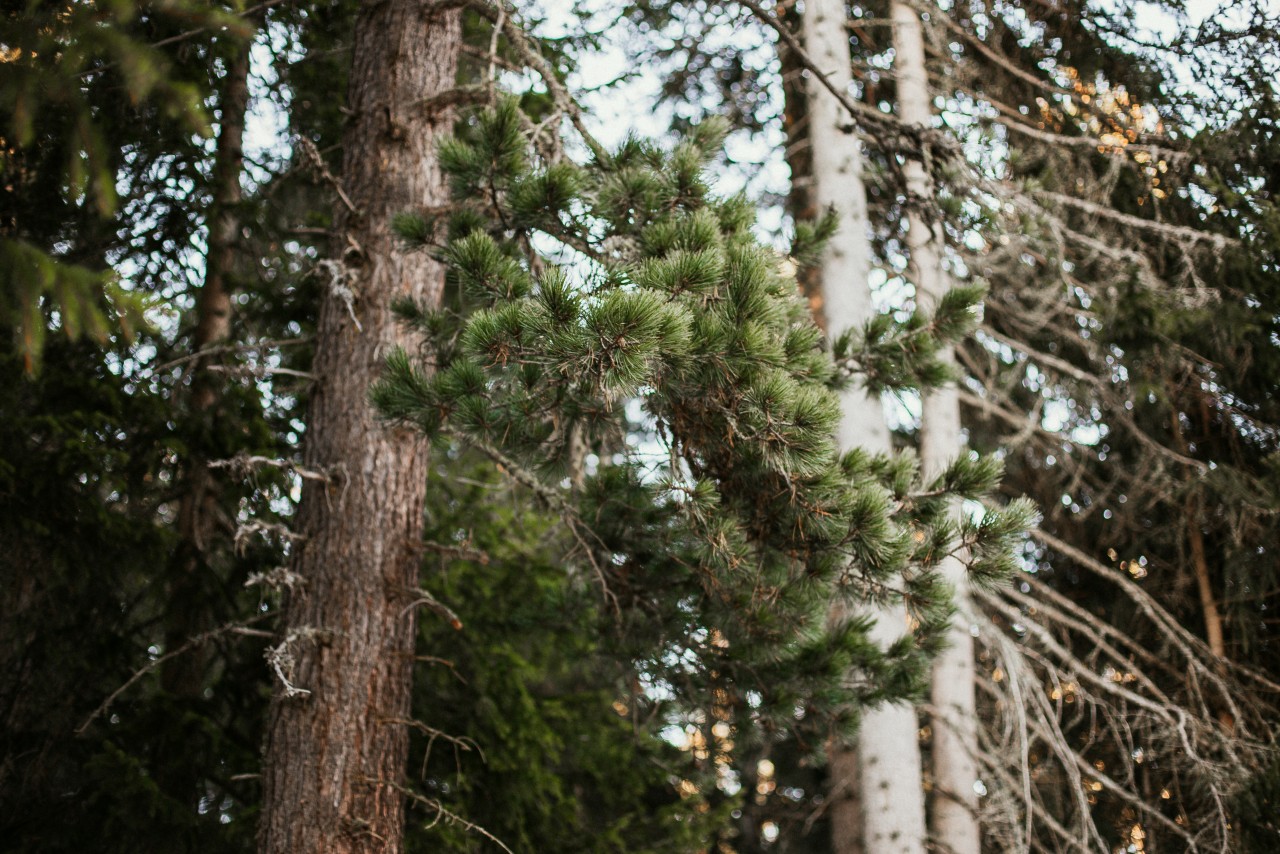
Swiss stone pine, botanically Pinus cembra, grows where things end for most trees: between roughly 1,500 and 2,500 metres, at the upper tree line of the Alps and the Carpathians. In the Dolomites it often stands alone on a slope, shaped by wind and bent, and withstands temperatures below minus 40 degrees.
The bird that plants the forest
Swiss pine cones do not open by themselves. Their seeds — pine nuts — are heavy and would simply lie beneath the tree. Dispersal is almost entirely the work of the spotted nutcracker. In autumn it gathers thousands of seeds and hides them in the ground as a winter store, spread over a wide area. What it fails to find germinates. Without this bird there would scarcely be any Swiss pine forests — one of the closest partnerships between animal and tree in Europe.
Why the wood takes so long
At that altitude the growing season is short. Swiss pine lays down correspondingly narrow annual rings; a centimetre of diameter often takes a decade. Two hundred years can easily pass before a trunk is strong enough for a bowl. Individual trees live for more than a thousand years.
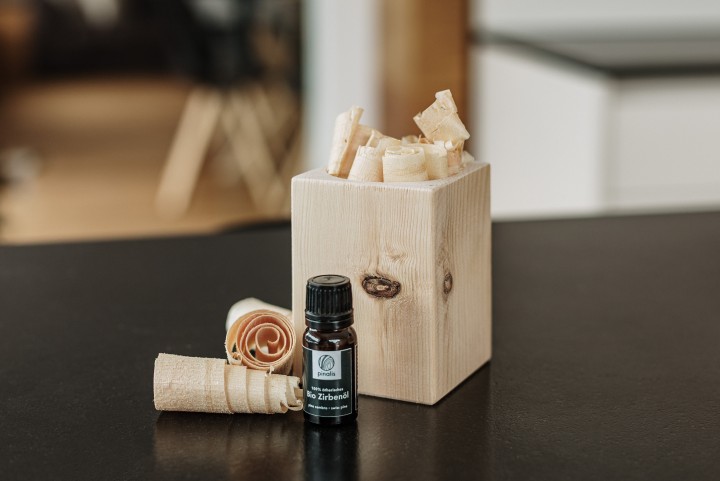
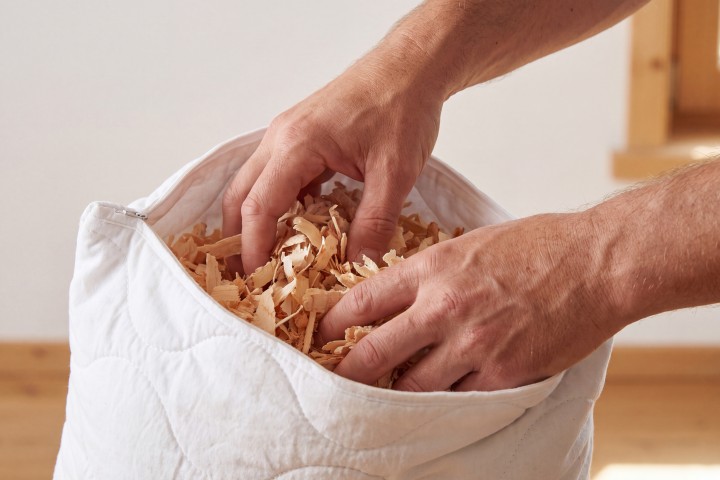
That slow growth is exactly what makes the wood: light, soft enough to carve and turn, dimensionally stable — and rich in essential oils, above all pinosylvin. That is why it still smells after decades and is largely left alone by insects and fungi.
Where our wood comes from
We work in Ortisei in Val Gardena, in the heart of the Dolomites. Our wood comes from the surrounding area, from ordinary forest use — mostly from thinning and from windthrow. Forestry in South Tyrol is strictly regulated; considerably less is harvested than grows back, and clear-cutting is not permitted in protection forest in any case.
After storm Vaia in October 2018 a great deal of timber lay on the ground in the Dolomites. Working it up was not a business opportunity but a necessity — conifers left lying are the nursery of the bark beetle. Some of the wood that passed through the workshops in the years that followed came from those areas.
From trunk to bowl
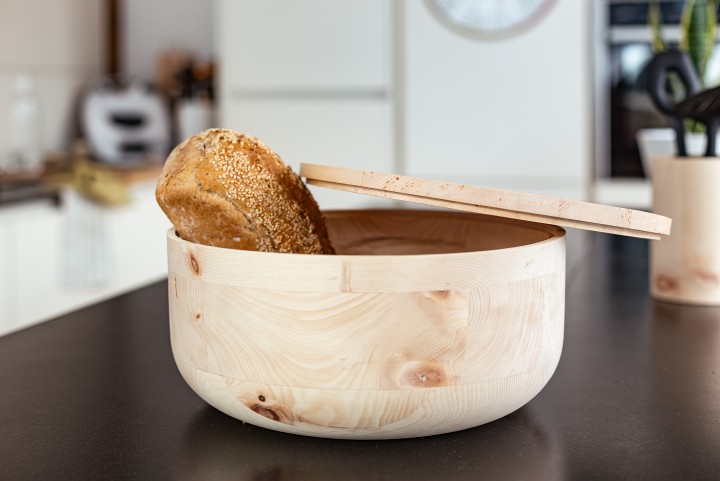
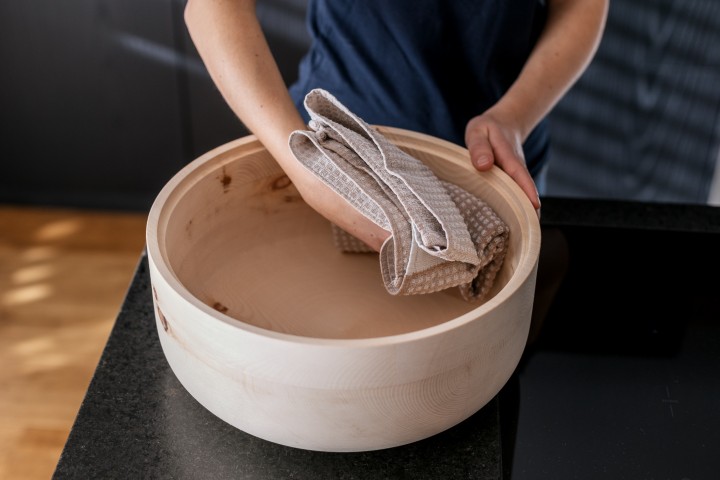
Freshly felled Swiss pine holds a lot of water and cannot be worked straight away. It is sawn, stacked and dried — in the open air roughly one year per centimetre of thickness, in a kiln considerably faster but with more tension left in the wood. Only then does it go on the lathe. A bowl you are holding today therefore has at least one or two years of preparation behind it — after two centuries on the mountain.
What that means for the price
A tree that takes two hundred years is not a raw material you can multiply at will. When Swiss pine goods are strikingly cheap, savings were made either on the wood or on the work. Usually on both.