Caring for a Swiss pine bowl: cleaning, oiling, treating stains
Published on
Our bowls are turned from a single piece of wood and left untreated or only lightly oiled. That is deliberate: a varnished surface would lock the scent in and turn the bowl into a plastic object with a wooden look. The price is a little attention.
The three things to avoid
- No dishwasher. Heat and lasting moisture drive the wood apart. A single cycle can crack a bowl beyond repair.
- No soaking. The bowl has no business sitting in the sink either. Water works into the fibres, the wood swells, and as it dries it contracts unevenly.
- No harsh cleaners. Washing-up liquid degreases — and it is exactly that grease, the wood's own oils, that we want to keep.
Cleaning it properly
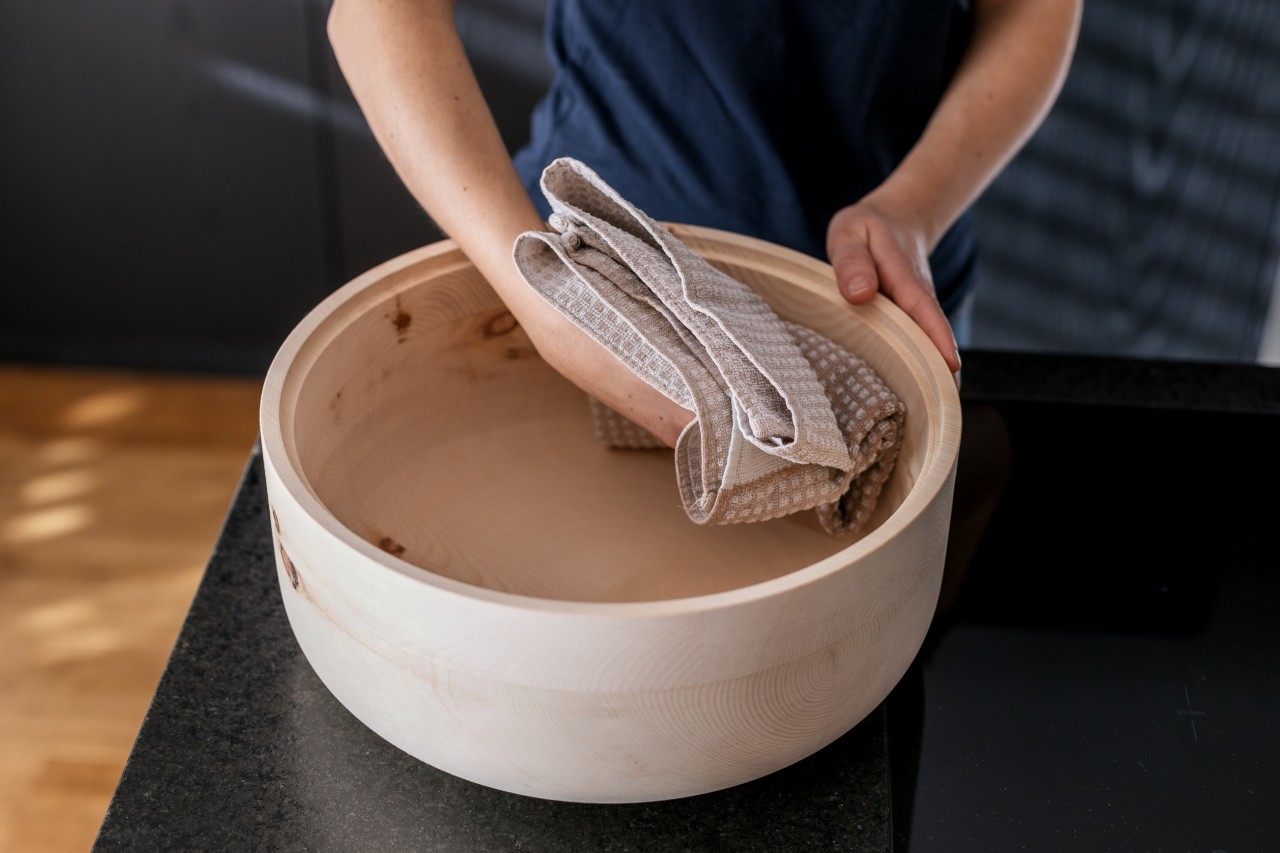
Wipe it out briefly with a damp sponge, then go over it straight away with a dry cloth. For stubborn residue, a little coarse salt works as a gentle abrasive: scatter it in, rub with half a lemon or a cloth, empty it out, wipe with a damp cloth, dry. That cleans and leaves it smelling fresh.
Oiling — twice a year
This is the one thing that wants doing regularly. Food-safe oils that do not turn rancid are what you need: boiled linseed oil sold as a wood oil, walnut oil, or a ready-made hard oil for kitchen woodware. Olive oil is not suitable — it goes rancid over time and then smells sharp.
How: apply a thin film with a cloth, let it soak in for twenty minutes, then take the excess off thoroughly. Leave it to air overnight. The bowl darkens a little and the grain comes forward — that is intended.
Stains
Swiss pine works. A dark mark from a berry or a damp saucer often disappears by itself if you give it a few weeks. If it stays, careful sanding with fine paper (grit 220 or finer) helps, always with the grain, followed by oiling. A welcome side effect: after sanding the bowl smells as it did on the first day.
Cracks
Fine hairline cracks at the end grain are normal and not a defect — they show you are holding solid timber. What you can prevent is the cause: sharp changes in temperature and dry air from heating. A bowl does not belong directly on a radiator or in full window sun.
Which bowl suits what?
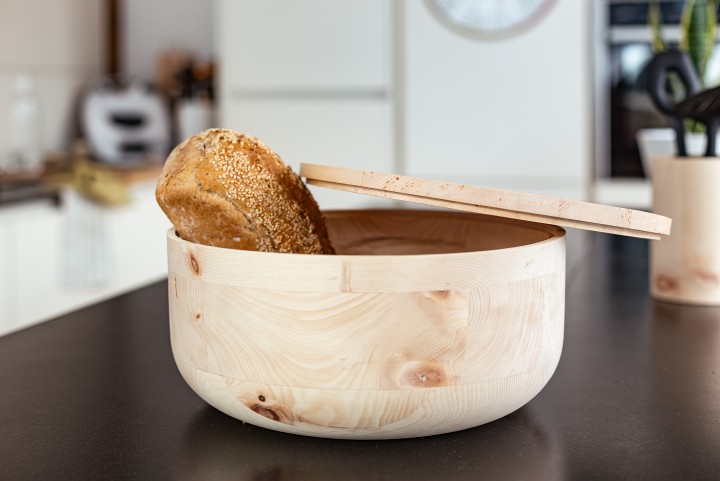
For fruit, bread, nuts, pastry and anything dry, Swiss pine bowls are ideal. For juicy food — sliced tomatoes, dressed salads — use an insert or another container. Not because it damages the bowl immediately, but because acids and pigments leave traces in open-pored wood.