Using Swiss pine oil properly: dosage, diffusers and what “pure” means
Published on
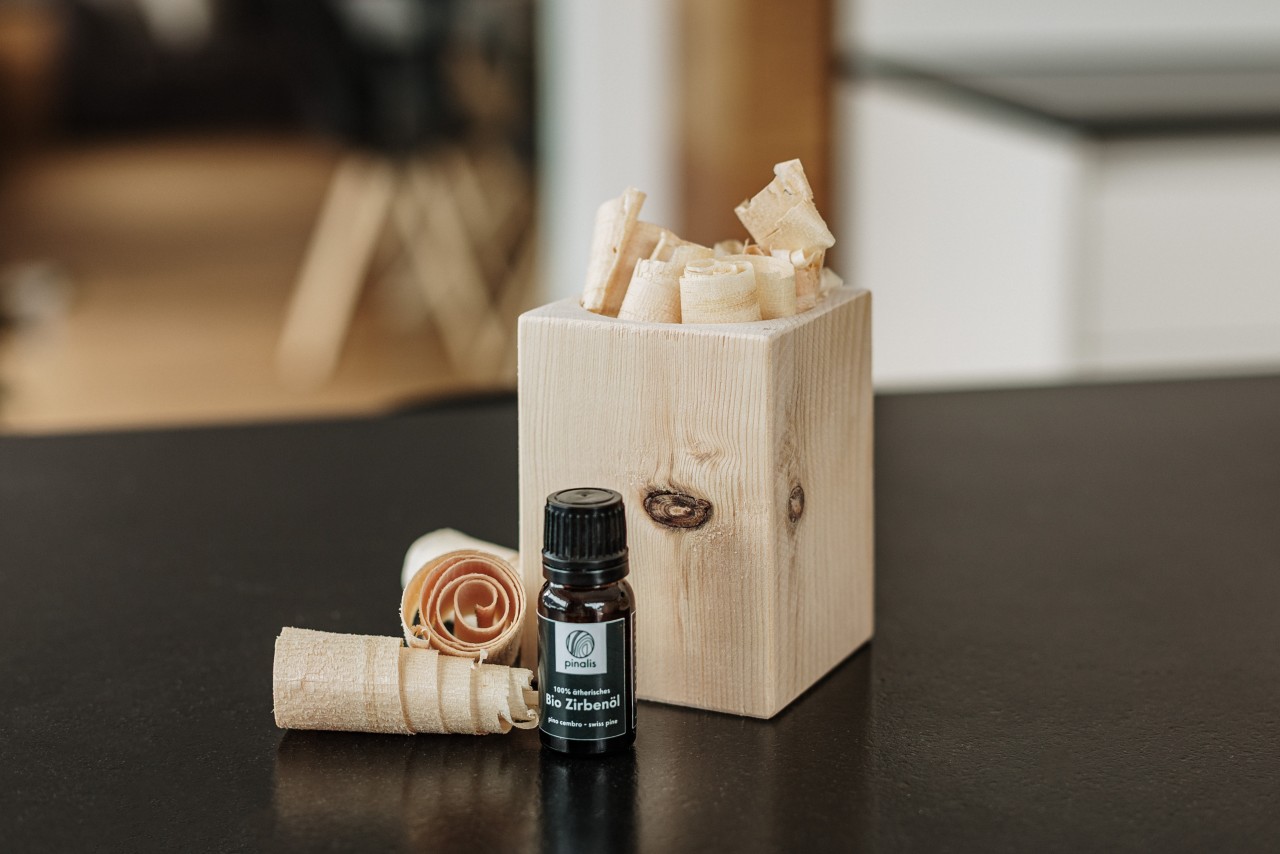
A litre of essential Swiss pine oil takes a great deal of wood. That explains the price and, at the same time, the most important rule for using it: less is more. Being generous with it does not give you a stronger scent, it gives you a sharp one.
Pure or fragrance oil — the difference matters
Bottles carry very similar words for very different things:
- 100 % pure essential oil is obtained by steam distillation from the plant material. Nothing is added and nothing is diluted. The label carries the botanical name, here Pinus cembra.
- Fragrance or aroma oil is as a rule reconstructed synthetically or blended with carrier oils. It smells similar, costs a fraction and has little to do with the tree.
Three details are worth checking when you buy: the botanical name, the origin and the method of extraction. If one of them is missing, be careful.
Dosage
As a guide for an ordinary room:
- Reed diffuser: fill the bottle and set three to five reeds in it. More reeds means more scent — that is how you adjust the strength without wasting oil.
- Scent cube or bowl: three to five drops, topped up every few weeks.
- Ultrasonic diffuser: two to four drops per 100 ml of water. No more.
- Sauna: only use oils declared suitable for it, and always diluted in the water — never undiluted on hot stones.
The Swiss pine diffuser
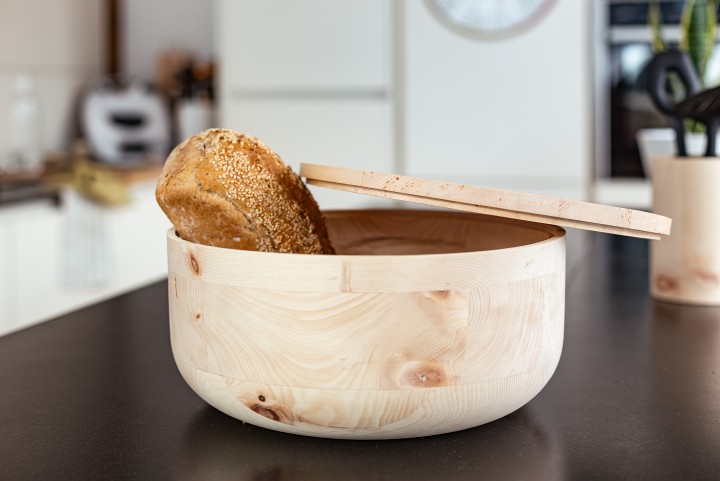
A diffuser made of Swiss stone pine has one advantage over glass: the wood takes up oil itself and releases it slowly. It therefore keeps its scent even once the bottle is empty. The reeds are a consumable — when they clog up and the fragrance fades, you replace the reeds, not the whole thing.
What not to do
Essential oils do not belong undiluted on skin, and they are not to be swallowed. Caution is warranted with pregnant women, infants, small children and people with asthma — if in doubt, ask a doctor. Essential oils are also a problem for cats, which metabolise certain components poorly. In a household with a cat, diffuse sparingly and always leave one room open for the animal to move to.
And in practical terms: oil on varnished furniture can leave marks. Stand diffusers and bottles on a coaster.
Storage
Dark, cool and firmly closed. Light and oxygen change essential oils. In its brown bottle in a cupboard, Swiss pine oil keeps for several years; left open, it loses much of its character within months.