Swiss pine in the kitchen: chopping boards, bread bins, hygiene
Published on
Few kitchen questions are answered wrongly as stubbornly as this one: wood or plastic? The reputation of wood as unhygienic has held for decades — even though studies since the 1990s suggest the opposite.
What the research says about hygiene
Work at the University of Wisconsin (Cliver and Ak, 1990s) compared wooden and plastic chopping boards deliberately contaminated with bacteria. On the wooden board the organisms were no longer detectable after a short time; on the plastic board they survived, particularly in the knife grooves.
The explanation: wood draws moisture, and with it bacteria, into its capillaries, where they dry out. With conifers such as Swiss pine there are also the wood's own compounds, which are credited with an inhibiting effect on bacteria and mould.
Even so: no board replaces sensible practice. Use a separate board for raw meat and poultry, and wash it in hot water afterwards. And a deeply scored board should be replaced — whatever it is made of.
Bread in a Swiss pine bin
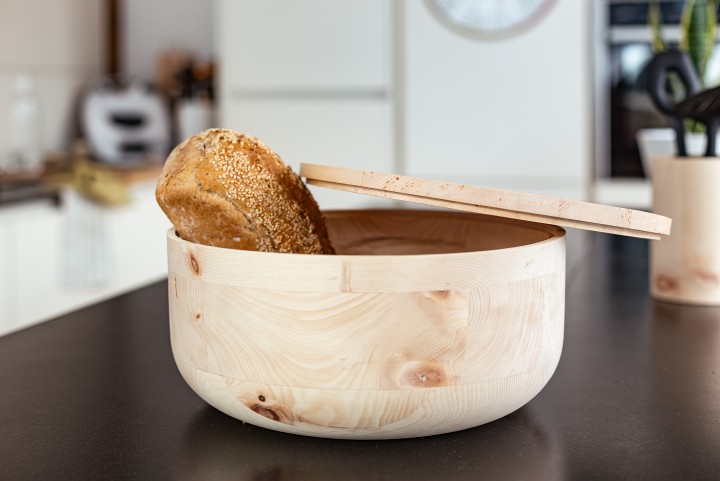
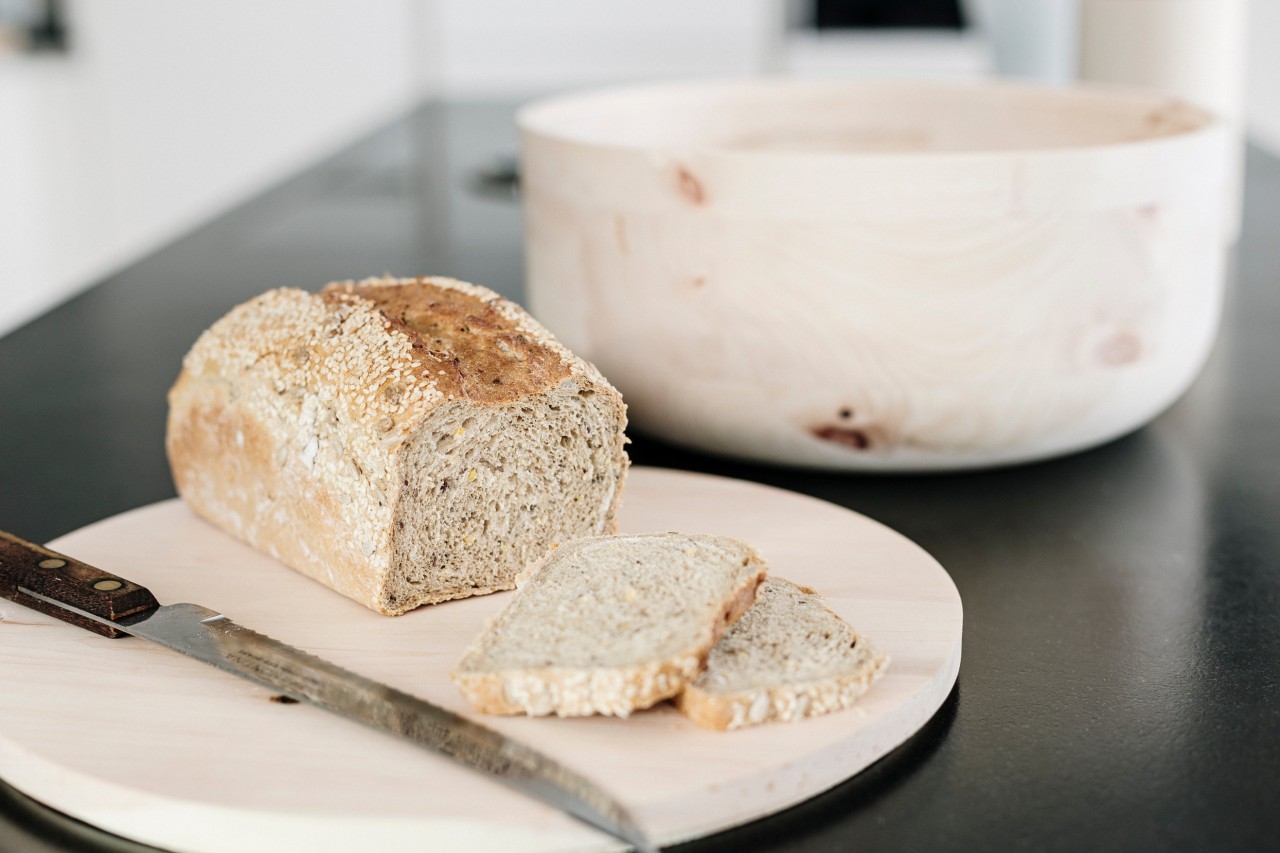
A bread bin made of Swiss pine works differently from one of metal or plastic. Wood takes up excess moisture and gives it back when the inside becomes too dry. Bread therefore stays sliceable for longer without going mouldy — the commonest reason bread spoils in an airtight plastic box.
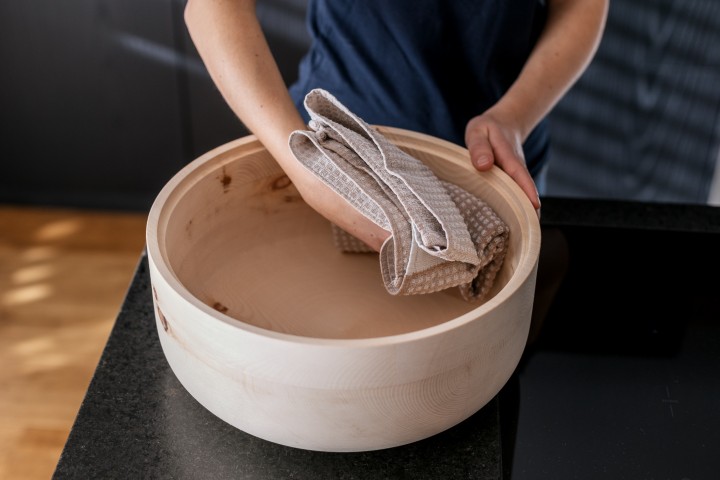
For that to work, the bin needs air. A lid that does not close completely tight is an advantage here, not a defect. Empty the crumbs every week or two, wipe it out with a little vinegar water and let it dry well — that is all it needs.
What Swiss pine does well in a kitchen
- Bread, pastry, fruit, nuts: ideal, dry and fragrant.
- Bread bins and storage containers: its real strength.
- Cutting bread, cheese, vegetables: good — Swiss pine is soft enough to spare the blade.
- Utensil containers, serving boards: no trouble at all.
Where the limits lie
Swiss pine is a soft wood. A pine board scores faster than one of maple or beech — for heavy chopping it is the wrong choice. Strongly pigmented food such as beetroot or turmeric leaves traces. And oil wants applying once or twice a year, otherwise the wood dries out and cracks.
In the dishwasher?
No — not for any wooden item. The combination of heat, detergent and lasting moisture is the certain end. Wash it briefly by hand, dry it and let it air standing upright.